The Ultimate Guide to the 100 Ball Icons Set in Isometric 3D Style
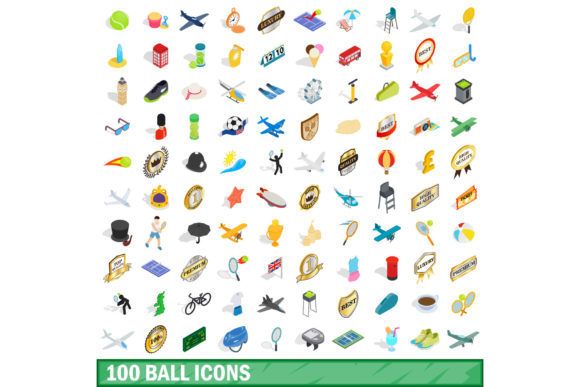
In the ever-evolving landscape of digital design, visual clarity and aesthetic appeal are paramount. Whether you are crafting a mobile application interface, designing an educational infographic, or creating assets for a modern website, the choice of iconography can make or break the user experience. Among the vast array of design elements available, the 100 Ball Icons Set in Isometric 3D Style has emerged as a versatile and powerful tool for designers seeking depth, dimension, and professional polish. This comprehensive collection offers more than just simple shapes; it provides a cohesive visual language that enhances communication through three-dimensional realism.
Understanding the Isometric Aesthetic
To fully appreciate the value of this icon set, one must first understand what "isometric" means in the context of graphic design. Unlike perspective drawings that rely on vanishing points to create a sense of depth, isometric projection uses parallel lines to represent three dimensions on a two-dimensional plane. This technique eliminates distortion, allowing objects to be measured and understood accurately from any angle.
When applied to ball icons—ranging from sports equipment like soccer balls and basketballs to abstract spheres representing data or connectivity—the isometric style adds a layer of tactile realism. It transforms flat, generic symbols into tangible objects that users can almost touch. This approach is particularly effective in modern UI/UX design, where users expect interfaces to feel intuitive and grounded in reality. By using isometric balls, designers can convey concepts such as motion, volume, and interaction with greater precision than traditional flat icons allow.
Why Choose a Comprehensive 100-Icon Collection?
Consistency is key in professional design. A scattered mix of styles can confuse users and dilute brand identity. The 100 Ball Icons Set addresses this challenge by providing a unified library of assets. Each icon shares the same lighting direction, shadow intensity, and geometric proportions, ensuring that they work harmoniously together regardless of their specific subject matter.
This comprehensiveness is crucial for several reasons:
- Cohesive Branding: Whether you are designing for a fitness app, a gaming platform, or an educational tool, having a single source for all your spherical icon needs ensures a polished look.
- Efficiency in Workflow: Designers spend less time searching for disparate assets and more time focusing on layout and functionality. Having 100 pre-designed, high-quality options streamlines the creative process.
- Versatility Across Industries: From medical representations (cells, molecules) to business concepts (targets, globes), the variety within the set covers a broad spectrum of use cases.
Practical Applications in Modern Design
The utility of isometric ball icons extends far beyond mere decoration. They serve functional roles in guiding user attention and explaining complex ideas. Here are some practical scenarios where this icon set shines:
1. User Interface (UI) Elements
In dashboard designs, isometric spheres can represent loading states, progress indicators, or interactive buttons. Their 3D appearance makes them stand out against flat backgrounds, drawing the eye to critical actions. For example, a "Play" button designed as a glossy, isometric sphere feels more inviting and clickable than a standard triangle.
2. Educational Infographics
Education relies heavily on visual aids to simplify complex topics. In science classes, isometric balls can represent atoms or cells. In geography, they can symbolize planets or global networks. The clarity of the isometric style helps students visualize spatial relationships without getting lost in artistic abstraction.
3. Marketing and Advertising
For marketing materials, visual impact is everything. High-quality 3D icons add a premium feel to brochures, social media posts, and web banners. They suggest innovation and attention to detail, qualities that resonate with consumers looking for reliable products or services.
Technical Formats: JPG, EPS, AI, PSD, PNG
One of the standout features of this icon set is its support for multiple file formats, catering to different stages of the design workflow. Understanding these formats is essential for maximizing their potential.
Vector Formats: EPS and AI
The EPS (Encapsulated PostScript) and AI (Adobe Illustrator) files are vector-based. This means they can be scaled to any size without losing quality. If you need to print a large billboard or resize an icon for a favicon, vector files are indispensable. They also allow designers to edit individual components, change colors, or modify shadows directly within Adobe Illustrator, offering maximum flexibility.
Raster Formats: PNG and JPG
For web development and quick previews, PNG and JPG files are often preferred. PNGs support transparency, which is crucial for overlaying icons on various background colors without unsightly white boxes. JPGs, while not supporting transparency, offer smaller file sizes for faster web loading when transparency is not required. These formats ensure that your designs render correctly across different browsers and devices.
Layered Files: PSD
The PSD (Photoshop Document) format preserves layers, masks, and effects. This is invaluable for designers who want to tweak the lighting, adjust drop shadows, or composite the icons into more complex scenes. It bridges the gap between vector precision and raster editing capabilities.
Common Misconceptions About 3D Icons
Despite their popularity, there are some misconceptions about using 3D-style icons in design. One common belief is that they are too heavy or slow down website performance. However, with optimized vector files and compressed raster versions, this is rarely an issue. Another misconception is that 3D icons are outdated or overly flashy. In reality, modern isometric design is clean, minimalist, and highly functional, striking a balance between aesthetics and usability.
Furthermore, some designers worry that 3D icons lack versatility. On the contrary, the neutral yet detailed nature of isometric balls allows them to blend seamlessly into both corporate and playful environments. They are adaptable enough to fit a startup’s landing page or a hospital’s patient portal.
Building a Broader Understanding
Ultimately, the 100 Ball Icons Set in Isometric 3D Style is more than just a bundle of graphics; it is a toolkit for better communication. By leveraging the principles of isometric projection and high-quality asset management, designers can create experiences that are not only visually appealing but also intuitively understandable. As technology continues to advance, the demand for rich, interactive, and immersive visual content will only grow. Investing in a comprehensive, well-formatted icon set like this prepares designers and businesses for a future where visual storytelling is at the forefront of engagement.
Whether you are a seasoned graphic designer looking to expand your library or a beginner eager to elevate your projects, exploring the possibilities of isometric 3D icons is a step toward mastering the art of digital communication. Embrace the depth, clarity, and versatility they offer, and watch your designs transform from ordinary to extraordinary.