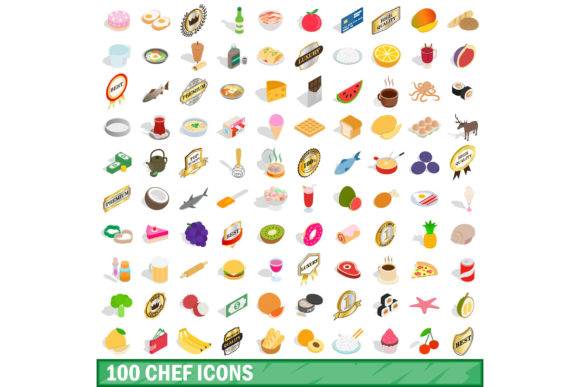
The Ultimate Guide to 100 Chef Icons Set in Isometric 3D Style for Modern Design Projects
In the rapidly evolving world of digital design, visual communication is no longer just about conveying information—it is about creating an experience. Whether you are designing a mobile application for food delivery, crafting a menu for a high-end restaurant, or developing an educational module for culinary arts, the quality and style of your graphics play a pivotal role. This is where specialized asset libraries come into play. Among the most sought-after resources for designers today is the 100 Chef Icons Set in Isometric 3D Style. This comprehensive collection offers a versatile, modern, and visually engaging way to bring culinary themes to life.
But what exactly makes this specific icon set so valuable? Why has the isometric 3D style become a dominant trend in UI/UX and graphic design? In this article, we will explore the significance of these icons, their practical applications, the technical benefits of their file formats, and how they can elevate your creative projects from ordinary to extraordinary.
Understanding the Isometric 3D Aesthetic
To appreciate the value of the 100 Chef Icons Set, it is essential to first understand the design language it employs: isometric projection. Unlike traditional perspective drawing, which uses vanishing points to create depth, isometric drawing represents three-dimensional objects in two dimensions without distortion. The axes remain parallel, and the scale remains consistent throughout the image.
This technique creates a unique sense of depth and volume that feels structured, clean, and highly organized. For designers, this is crucial because it allows complex subjects—like a bustling kitchen or a detailed dish—to be represented clearly without visual clutter. When applied to chef-related imagery, such as cooking utensils, ingredients, or culinary tools, the isometric 3D style adds a layer of sophistication and playfulness that flat 2D icons often lack.
Why Is It Trending?
- Visual Depth: It breaks the monotony of flat design, adding a tactile quality that engages users.
- Modern Appeal: It aligns with contemporary trends seen in tech startups, fintech dashboards, and health apps.
- Clarity: The geometric precision ensures that even small details are readable on various screen sizes.
What’s Inside the 100 Chef Icons Set?
A generic icon pack might offer a single chef hat or a basic knife. However, a curated set like the 100 Chef Icons Set is designed to cover the entire spectrum of culinary arts. This breadth ensures consistency across your project, whether you are illustrating a recipe blog or building a full-scale restaurant management software.
Typically, such a comprehensive collection includes categories such as:
Cooking Utensils and Tools
From whisk and spatula to rolling pins and tongs, these icons represent the everyday tools of the trade. In an isometric style, these items gain a realistic weight and presence, making them ideal for instructional guides or interactive cooking apps.
Fresh Ingredients
Food is at the heart of any culinary design. This set likely features vibrant representations of vegetables, fruits, meats, spices, and grains. The 3D rendering allows for texture and color variation, helping to distinguish between similar items, such as different types of peppers or leafy greens.
Kitchen Appliances
Modern kitchens are filled with technology. Icons representing blenders, ovens, microwaves, and refrigerators are essential for designs related to smart home integration or professional kitchen layouts.
Chef Attire and Characters
Human elements add personality. Icons depicting chefs in uniform, aprons, hats, and gloves help personalize the user experience, particularly in hospitality and service-oriented platforms.
Technical Versatility: Why Multiple File Formats Matter
One of the standout features of premium design assets is their adaptability. The 100 Chef Icons Set is not limited to a single format; it is available in JPG, EPS, AI, PSD, and PNG. Each format serves a specific purpose in the design workflow, ensuring that professionals from various disciplines can utilize the assets effectively.
Vector Formats: AI and EPS
For graphic designers working in Adobe Illustrator or CorelDRAW, the AI (Adobe Illustrator) and EPS (Encapsulated PostScript) files are indispensable. These vector-based formats allow for infinite scalability without loss of quality. If you need to print a large banner for a food festival or resize an icon for a favicon, vector files ensure crisp edges and smooth curves. They also allow for easy color customization, enabling brands to match their specific palette.
Raster Formats: JPG and PNG
Web developers and UI/UX designers often prefer PNG (Portable Network Graphics) files, especially those with transparent backgrounds. PNGs are perfect for overlaying icons onto different website sections or app interfaces without unwanted white boxes. JPG (JPEG) files, while compressed and smaller in size, are useful for quick previews or when transparency is not required, such as in email newsletters or social media posts.
Layered Files: PSD
The PSD (Photoshop Document) format is a goldmine for advanced users. These files typically contain layered compositions, allowing designers to isolate specific elements, adjust shadows, or modify textures within Photoshop. This level of control is vital for creating custom variations of the icons to fit niche branding requirements.
Practical Applications in Modern Business and Creativity
How does this icon set translate into real-world value? Let’s look at several industries where these assets are particularly impactful.
Food Delivery and Restaurant Apps
In the competitive food delivery market, user experience is king. An app that uses clear, attractive, and consistent iconography helps users navigate menus faster. Isometric icons can make the browsing experience feel more immersive, almost as if the user is looking down at a table laden with delicious food.
Online Culinary Education
Educational platforms benefit greatly from visual aids. When teaching someone how to chop an onion or use a specific knife technique, isometric diagrams provide a clear, step-by-step visual guide that is easier to follow than text alone. The 3D perspective helps learners understand spatial relationships and tool handling.
Marketing and Branding
Restaurants and food brands constantly seek ways to stand out. Using a cohesive set of 100 chef icons allows for consistent branding across websites, packaging, social media, and print materials. The professional look of isometric 3D graphics signals quality and attention to detail, traits that consumers associate with high-end dining experiences.
Interior Design and Architecture
For architects and interior designers specializing in commercial spaces, these icons can be used in floor plans or conceptual presentations to indicate kitchen zones, equipment placement, and workflow areas. The isometric view provides a better understanding of space utilization than top-down 2D maps.
Common Misconceptions About Icon Sets
While purchasing or downloading an icon set seems straightforward, there are common pitfalls that designers should avoid.
Misconception 1: "All Icons Are Interchangeable."
Not all icon sets maintain stylistic consistency. Some packs mix flat, line-art, and 3D styles, which can look disjointed in a final design. The 100 Chef Icons Set is valued specifically because it maintains a uniform isometric 3D style across all 100 items, ensuring a polished look.
Misconception 2: "Vector Files Are Always Better."
While vectors are superior for scalability, they are not always necessary. For web use, optimized PNGs may load faster and render consistently across different browsers. Understanding when to use AI/EPS versus PNG/JPG is key to efficient workflow management.
Misconception 3: "You Can’t Modify Pre-Made Icons."
Many designers fear that using pre-made assets limits creativity. However, with layered PSD files and editable vector shapes, these icons serve as a starting point rather than a finished product. You can recolor, reshape, and combine elements to create unique compositions that reflect your brand identity.
Conclusion: Elevating Your Design with Precision and Style
The 100 Chef Icons Set in Isometric 3D Style is more than just a collection of images; it is a powerful toolkit for modern designers. By combining the aesthetic appeal of 3D isometric art with the technical flexibility of multiple file formats, this set addresses the needs of a wide range of professionals, from app developers to marketing specialists.
Whether you are looking to enhance the user interface of a new food app, create engaging educational content, or strengthen your brand’s visual identity, investing in high-quality, versatile icon assets is a smart move. It saves time, ensures consistency, and ultimately delivers a more compelling visual story to your audience. As digital landscapes continue to grow more crowded, standing out with clean, sophisticated, and well-crafted graphics is not just an option—it is a necessity.
Take the time to explore how these icons can fit into your current projects. Experiment with the different formats, customize the colors to match your brand, and watch as your designs gain a new level of professionalism and engagement. In the world of digital design, the details matter, and with a comprehensive set like this, you have the tools to make every detail count.