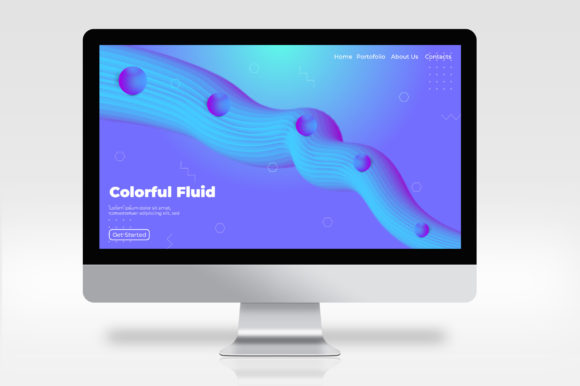
Fluid Landing Page
In the current digital landscape, where attention spans are short and visual competition is fierce, the initial impression of a website or social media campaign often determines its success. Designers and marketers frequently struggle to balance aesthetic appeal with technical functionality, especially when trying to create immersive experiences that feel modern yet accessible. This is where specialized assets like the Fluid Landing Page template become relevant tools in a creative workflow. It represents a specific approach to web design that leverages abstract 3D fluid dynamics to create engaging, high-impact visuals without requiring complex coding from the ground up.
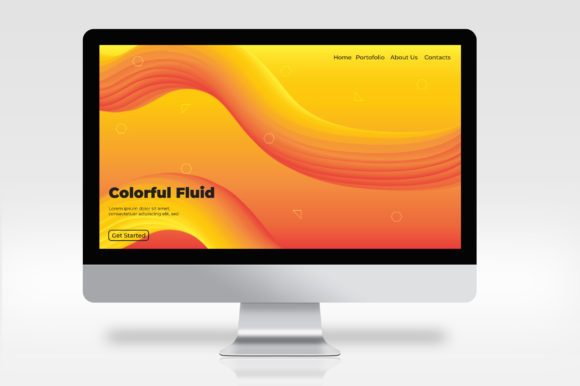
This resource is not merely a static image; it is a fully vector-based template designed for versatility. Whether the goal is to build a landing page for a fintech startup, create an eye-catching banner for social media campaigns, or design unique wallpapers for mobile devices, this asset provides a foundational structure that can be adapted to various contexts. The core concept revolves around "wavy shapes" and "futuristic banners" that utilize glowing retro waves and smooth gradients to evoke a sense of motion and depth. For professionals who need to deliver polished results quickly, understanding the practical application of such templates is essential.
Understanding the Visual Language of Fluid Design
The term "fluid" in this context refers to more than just responsive behavior on different screen sizes; it describes the organic, liquid-like forms that dominate the visual hierarchy. Unlike rigid geometric designs that rely on sharp angles and strict grids, fluid design mimics natural phenomena. The Fluid Landing Page utilizes these wavy, abstract shapes to guide the user’s eye across the interface. This technique is particularly effective in reducing cognitive load, as the human brain processes curved lines and flowing gradients more easily than disjointed elements.
The inclusion of "abstract 3D" elements adds another layer of sophistication. By using shading, highlights, and shadows within a vector environment, the design achieves a sense of depth that feels tactile. This is crucial for industries like banking or technology, where trust and innovation are key selling points. A bankcard or ATM card design, for instance, benefits from this futuristic aesthetic because it suggests security through advanced technology while remaining visually appealing. The glowing retro waves mentioned in the description tap into the nostalgia of the 80s and 90s synthwave culture, which remains popular among younger demographics but also appeals to older audiences familiar with that era’s aesthetic. This dual appeal makes the template broadly applicable.
Technical Specifications and Workflow Integration
One of the most significant advantages of this template is its technical foundation. Being fully vector ensures that the graphics remain crisp at any resolution. This is a critical feature for designers who work across multiple platforms, from small mobile screens to large outdoor billboards. The specification of "High resolution 300 dpi" confirms that the asset is print-ready, allowing for seamless transitions between digital and physical marketing materials. A freelancer working on a brand identity package can use the same source file for a website header, a business card, and a printed brochure without worrying about pixelation or loss of quality.
Compatibility is another major factor in usability. The template is built using Adobe CS, CS5, and Adobe CC standards. This wide range of compatibility means that users do not necessarily need the latest version of Creative Cloud to edit the file. Professionals who manage legacy systems or work in environments where software updates are restricted can still utilize this resource effectively. The file structure typically includes layers that are logically organized, allowing for easy customization of colors, text, and individual shape elements. This modularity is vital for maintaining consistency across a brand’s visual identity. If a company’s primary color shifts from blue to green, the designer can update the global styles or individual layers efficiently, rather than rebuilding the entire composition.
- Scalability: Vector format allows infinite scaling without quality loss.
- Software Flexibility: Compatible with older Adobe versions (CS/CS5) and modern CC suites.
- Layer Organization: Structured layers facilitate quick edits and asset swapping.
- Print Readiness: 300 DPI resolution supports high-quality physical output.
Practical Applications Across Industries
The versatility of the Fluid Landing Page makes it suitable for a diverse range of industries. For entrepreneurs and small business owners, the template offers a cost-effective way to establish a professional online presence. Instead of hiring a developer to code a custom animated background, they can import this vector banner into their website builder or use it as a static hero image that conveys movement through design alone. This is particularly useful for service-based businesses like agencies, consultancies, or creative studios that need to showcase their design capabilities immediately.
Marketers and bloggers can leverage the social media banner aspect of the template. In an era where content consumption happens primarily on mobile devices, thumbnails and cover images must stand out in a crowded feed. The glowing effects and vibrant gradients of the retro wave background provide high contrast, ensuring visibility even on smaller screens. Educators and publishers might find value in using these designs for course headers, webinar promotions, or digital newsletter backgrounds. The futuristic theme aligns well with topics related to technology, science, and future trends, helping to position the content as forward-thinking and authoritative.
For developers and UI/UX designers, this asset serves as a starting point for prototyping. The abstract nature of the fluid shapes allows for experimentation with layout structures. By placing call-to-action buttons and navigation menus over the wavy forms, designers can test how text readability interacts with dynamic backgrounds. This iterative process helps in refining the user experience before moving to final development. The ability to customize the design means that the template can be stripped back to minimal elements if a cleaner, more corporate look is required, or enhanced with additional effects for a more dramatic impact.
Evaluating Strengths and Potential Limitations
When assessing the value of any creative asset, it is important to look beyond the initial visual appeal. The primary strength of the Fluid Landing Page lies in its adaptability. It is not a one-size-fits-all solution but rather a flexible framework that can be molded to fit specific brand guidelines. The use of vector graphics ensures longevity; as design trends shift, the underlying geometry of the fluid shapes can be adjusted without losing the core aesthetic. This contributes to the long-term value of the purchase, as the asset does not become obsolete quickly.
However, there are considerations to keep in mind. While the visual impact is strong, heavy graphical elements can sometimes slow down website loading times if not optimized correctly. Although the source file is vector, exporting it for web use requires careful optimization to balance quality with file size. Designers must ensure that the glowing effects and gradients do not overwhelm the actual content of the page. The purpose of the landing page is to convert visitors, so the design should support the message, not distract from it. Additionally, while the template is customizable, achieving a truly unique look may require significant effort to move away from the default style. Users looking for a quick "copy-paste" solution might find that they still need to invest time in tailoring the colors and typography to match their brand.
Another limitation is the potential for visual fatigue. Retro wave aesthetics, by nature, are intense and saturated. For brands aiming for a minimalist or understated elegance, this style might be too aggressive. It is best suited for industries that embrace boldness and innovation, such as tech startups, gaming companies, music festivals, or nightlife venues. For more conservative sectors like healthcare or legal services, the design would need to be toned down significantly, perhaps by desaturating the colors and simplifying the shapes.
Who Should Consider Using This Resource?
The ideal user for the Fluid Landing Page template is someone who values efficiency without compromising on quality. Freelancers and agency designers will appreciate the time saved by having a professionally crafted base to work from. Entrepreneurs who handle their own marketing will benefit from the ease of use and the professional finish that the template provides. Content creators and influencers can use the social media variants to maintain a cohesive and stylish brand image across platforms.
Furthermore, this resource is valuable for those who are not expert coders but have a good eye for design. The ability to manipulate vector shapes in Adobe software empowers non-programmers to create sophisticated layouts. It bridges the gap between graphic design and web implementation, allowing for a more integrated creative process. For educators teaching digital design, this template can serve as an excellent case study in vector manipulation, layer management, and color theory.
In conclusion, the Fluid Landing Page is a robust and versatile tool for modern digital communication. Its combination of abstract 3D aesthetics, vector flexibility, and broad compatibility makes it a worthwhile addition to a designer’s toolkit. While it requires some skill to customize effectively, the payoff is a high-quality, futuristic design that can enhance the perceived value of any project. By understanding its strengths and limitations, users can strategically deploy this asset to meet their specific goals, whether that involves boosting engagement on social media, creating a memorable first impression on a website, or designing striking promotional materials. In a market saturated with generic templates, the distinct visual language of fluid, retro-wave-inspired design offers a compelling alternative that stands out.