Elevate Your Digital Projects with a Premium 100 Device Icons Set in Isometric 3D Style
In the rapidly evolving landscape of digital design, visual communication is paramount. Whether you are crafting a landing page for a startup, designing an educational app, or creating a presentation for a corporate board meeting, the right imagery can make the difference between a forgettable experience and an engaging one. This is where a comprehensive 100 device icons set in isometric 3D style becomes an indispensable asset for designers, developers, and content creators alike.
These assets are not merely decorative; they serve as powerful tools to simplify complex technological concepts. By offering a versatile collection of vector illustrations available in formats like JPG, EPS, AI, PSD, and PNG, this icon set bridges the gap between technical functionality and aesthetic appeal. Let us explore why this specific style has become a staple in modern web design and how it can elevate your creative workflow.
Understanding the Power of Isometric 3D Design
To appreciate the value of this icon set, one must first understand the unique characteristics of isometric 3D design. Unlike traditional flat design, which relies on two-dimensional shapes and solid colors, isometric illustration creates a three-dimensional illusion without using perspective vanishing points. Instead, objects are drawn at a consistent angle, typically 30 degrees, giving them depth and volume while maintaining geometric precision.
This style offers several distinct advantages:
- Depth and Clarity: The 3D effect allows users to visually distinguish different components of a device, making it easier to understand how it works.
- Engagement: Our brains are naturally drawn to objects that appear to have volume. Isometric icons capture attention more effectively than flat silhouettes.
- Versatility: These icons fit seamlessly into various design languages, from minimalist interfaces to rich, detailed infographics.
When applied to technology, isometric 3D icons transform abstract concepts into tangible objects. A simple "server" icon becomes a stack of physical hardware; a "cloud" icon transforms into a network of interconnected nodes. This tangibility is crucial for explaining modern tech ecosystems to general audiences.
The Significance of a Comprehensive Device Collection
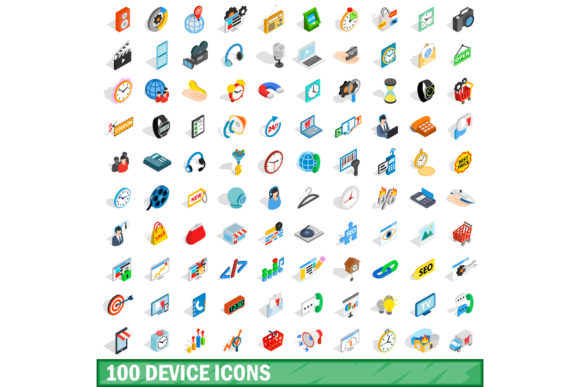
A single icon rarely tells the whole story. In today's multi-device world, users interact with technology through smartphones, tablets, laptops, smartwatches, desktops, and even emerging devices like VR headsets and IoT sensors. A 100 device icons set ensures that no matter what aspect of the digital ecosystem you need to represent, you have the perfect visual tool at your disposal.
This extensive collection covers the full spectrum of modern connectivity. You will find representations of:
- Mobile Devices: Smartphones, feature phones, and foldable screens.
- Computing Hardware: Laptops, desktop towers, all-in-one PCs, and gaming consoles.
- Wearables: Smartwatches, fitness trackers, and augmented reality glasses.
- Peripherals: Keyboards, mice, printers, and external hard drives.
- Networking Equipment: Routers, modems, servers, and switches.
Having access to such a wide variety of devices allows designers to create cohesive narratives. For instance, when illustrating a "remote work" scenario, you can simultaneously depict a laptop, a smartphone, and a smartwatch, showing how data flows seamlessly across these platforms. This level of detail adds authenticity and professionalism to any project.
Why Vector Formats Matter for Professional Workflows
One of the most critical features of this icon set is its availability in multiple professional file formats: JPG, EPS, AI, PSD, and PNG. Each format serves a specific purpose in the design pipeline, ensuring flexibility regardless of the software you use or the medium you are targeting.
Vector files (EPS and AI) are the gold standard for scalability. Because they are built on mathematical paths rather than pixels, you can resize a device icon from a tiny favicon to a massive billboard without losing any quality. This is essential for branding projects where consistency is key. If you need to tweak the color scheme of a laptop icon to match your brand guidelines, vector files allow you to edit individual layers and colors effortlessly.
Raster formats (JPG and PNG) offer convenience for quick integration. High-resolution PNGs with transparent backgrounds are perfect for web developers who need to drop images directly into HTML/CSS without worrying about layer complexity. Meanwhile, PSD files provide a fully layered Photoshop document, allowing for advanced manipulation, shadow effects, and texture overlays for those who prefer working in Adobe Photoshop.
Practical Applications Across Industries
The utility of an isometric 3D device icon set extends far beyond simple decoration. It plays a pivotal role in various sectors, enhancing communication and user experience.
Technology and SaaS Marketing
Software companies often struggle to explain their services. Isometric icons help visualize the "how." For a cloud storage service, an icon set featuring a server rack connected to a laptop and a tablet instantly communicates accessibility and synchronization. These visuals reduce cognitive load, helping potential customers grasp the product's value proposition in seconds.
Education and E-Learning
In the realm of education, clarity is everything. When teaching students about computer science or digital literacy, static diagrams can be dry. Incorporating vibrant, 3D-rendered device icons into slide decks or online courses makes the material more engaging. Students are more likely to retain information when it is presented alongside colorful, relatable graphics.
Business Presentations
Corporate presentations require a balance of professionalism and visual interest. Standard bullet points can be tedious. By replacing text-heavy lists with a series of isometric device icons representing different stages of a workflow, presenters can create dynamic, easy-to-follow roadmaps that keep stakeholders engaged.
App and Web UI/UX Design
User Interface (UI) designers increasingly use isometric styles to create distinctive app environments. Whether designing a dashboard for a fintech application or a health tracking platform, these icons add a layer of sophistication. They guide the user's eye and provide context for actions, such as clicking a "sync" button next to a phone icon.
Common Misunderstandings About 3D Icons
Despite their popularity, there are some misconceptions regarding the use of 3D icons in web and print design. One common assumption is that 3D graphics always result in large file sizes that slow down websites. While this was true in the early days of the internet, modern optimization techniques and vector formats mitigate this issue significantly.
Furthermore, some designers fear that 3D styles look too "cartoonish" for serious business contexts. However, the key lies in execution. A well-crafted isometric set maintains clean lines, appropriate lighting, and a cohesive color palette that aligns with professional standards. The goal is not to create a video game asset but to enhance readability and visual hierarchy.
How to Integrate These Icons Into Your Workflow
Integrating a 100 device icons set into your projects is straightforward if you follow best practices. First, identify the core message of your design. Do you need to emphasize mobile responsiveness? Select the smartphone and tablet icons. Are you focusing on data security? Choose the server and lock icons.
Next, select the appropriate file format based on your final output. Use AI or EPS files if you plan to modify the icons or need infinite scalability. Use PNG files for immediate web deployment. Finally, ensure consistency in styling. Since you are using a pre-made set, the lighting and angles should already match, but you may want to apply a uniform color overlay to tie them into your specific brand identity.
Conclusion: A Vital Tool for the Modern Creator
In an era where visual content dominates our digital interactions, having high-quality, versatile assets is non-negotiable. A 100 device icons set in isometric 3D style represents more than just a collection of images; it is a toolkit for storytelling. It empowers designers to translate complex technological realities into accessible, beautiful visuals that resonate with audiences.
Whether you are building a website, creating a marketing campaign, or developing educational materials, the ability to depict the vast array of devices we use every day is invaluable. With support for industry-standard formats like JPG, EPS, AI, PSD, and PNG, this set ensures that you have the flexibility to adapt to any project requirement. By embracing the depth and clarity of isometric 3D design, you can elevate your work from good to exceptional, ensuring your message is not only seen but understood.
As technology continues to advance, the need for clear, engaging visual communication will only grow. Investing in a comprehensive icon set is an investment in the clarity and success of your future designs.