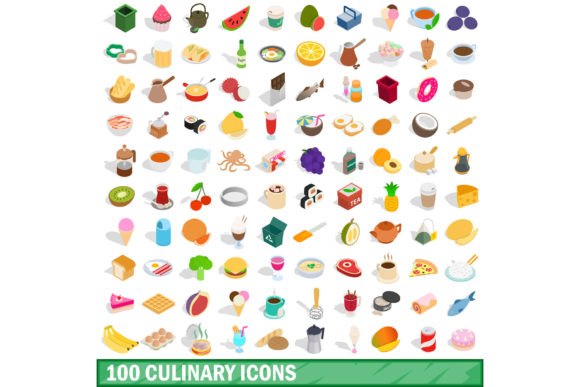
100 Culinary Icons Set: Elevating Visual Storytelling in Food Design
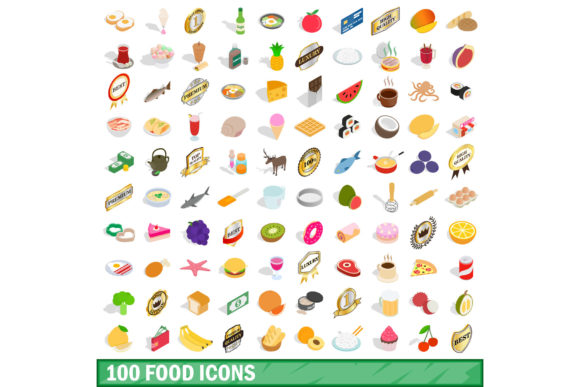
In the world of digital design, food is more than just sustenance; it is a powerful visual language. Whether you are crafting a menu for a trendy bistro, designing an app interface for recipe sharing, or creating packaging for artisanal goods, the imagery you choose sets the tone before a single word is read. This is where the 100 Culinary Icons Set becomes an indispensable asset. Presented in a striking isometric 3D style, this collection offers a modern, tactile approach to culinary illustration that stands out in a crowded digital landscape.
The shift from flat, two-dimensional graphics to isometric designs has been gradual but significant. Isometric art provides depth and dimension without the complexity of full photorealism, offering a clean, geometric aesthetic that feels both contemporary and inviting. For designers working with vector formats like EPS, AI, and PSD, having access to a comprehensive set of 100 icons means consistency, scalability, and professional polish can be achieved quickly.
Why Isometric Style Resonates with Modern Audiences
To understand the value of this icon set, one must first appreciate why isometric design works so well for culinary themes. Unlike traditional clip art, which can feel dated or generic, isometric illustrations mimic the physical world through angled perspectives. When a user sees a 3D-rendered burger, a stack of pancakes, or a steaming bowl of ramen rendered in crisp vector lines, their brain processes it as something tangible and real.
This psychological connection is crucial for engagement. In mobile app development, for instance, users scroll rapidly. An isometric icon catches the eye because it breaks the monotony of flat UI elements. It suggests quality and attention to detail. The 100 Culinary Icons Set leverages this by providing a cohesive library where every item—from kitchen utensils to finished dishes—shares the same lighting, shadow, and perspective rules. This uniformity is often difficult to achieve when sourcing individual assets from different creators, making this bundle a time-saver for any serious designer.
Real-World Applications Across Industries
The versatility of these icons extends far beyond simple decoration. Different industries leverage this specific aesthetic to solve unique communication challenges. Here is how various professionals are integrating the 100 Culinary Icons Set into their workflows.
Restaurant Menus and Digital Ordering Systems
For restaurateurs moving toward QR-code menus or self-service kiosks, clarity is king. A customer scanning a code on a table does not have time to decipher vague descriptions. High-quality visuals act as instant identifiers. An isometric icon of a "Spicy Tuna Roll" or a "Margherita Pizza" allows diners to make choices faster, reducing friction in the ordering process. Because the icons are available in high-resolution PNG and JPG formats, they render sharply on both small smartphone screens and large tablet displays, ensuring the food looks appetizing regardless of the device used.
Food Delivery and Recipe Apps
In the competitive world of food delivery applications, brand identity is everything. Apps need to convey speed, variety, and reliability. The isometric style lends itself perfectly to gamification elements within apps. Imagine a progress bar shaped like a growing vegetable garden or notification badges featuring cooking pots. The 100 Culinary Icons Set provides the building blocks for these micro-interactions. Furthermore, for recipe platforms, categorizing ingredients or steps (e.g., chopping, boiling, baking) with consistent 3D icons helps guide the user through complex instructions visually, making cooking seem less intimidating and more accessible.
Packaging and Brand Identity for Food Products
Artisanal brands, from craft coffee roasters to organic snack companies, often struggle to differentiate themselves on crowded shelves. While photography is common, it can sometimes look too similar across competitors. Vector-based isometric illustrations offer a distinct alternative. They can be scaled infinitely without losing quality, making them ideal for packaging design. A designer might use a custom arrangement of icons from this set to create a pattern on a cereal box or to illustrate the journey of ingredients on a wine label. The ability to edit the source files in Adobe Illustrator (AI) or Photoshop (PSD) allows for color customization to match specific brand palettes, ensuring the final product aligns perfectly with marketing guidelines.
Educational Materials and Children’s Content
It is not just commercial enterprises that benefit. Educational publishers and content creators for children find immense value in this style. Isometric images are playful yet structured, making them excellent for teaching concepts related to nutrition, geography (where foods come from), or basic cooking skills. The clean lines and bright colors inherent in many isometric designs are engaging for younger audiences while remaining sophisticated enough for adult learners in culinary schools or online courses.
Technical Advantages of Vector Formats
One of the most practical aspects of acquiring the 100 Culinary Icons Set is the variety of file formats provided. Understanding the strengths of each format ensures you get the most out of your purchase.
- EPS and AI: These vector formats are essential for print projects. If you are designing a large-format poster, a billboard, or high-end packaging, vectors ensure that your icons remain crisp at any size. You can also easily modify the shapes, colors, and sizes within Adobe Illustrator to tailor the icons to your specific needs.
- PSD: For designers who prefer pixel-level control, the layered PSD files allow for detailed editing. You can adjust shadows, highlights, or separate components of complex icons like a multi-layered sandwich. This flexibility is invaluable for creating composite images or integrating icons seamlessly into existing designs.
- PNG and JPG: These raster formats are ready-to-use for web and social media. With transparent backgrounds (in the case of PNGs), they can be dropped directly into websites, presentations, or digital ads without needing further editing. This is perfect for quick turnaround projects or for non-designers who need high-quality visuals for marketing materials.
Considerations for Implementation
While the 100 Culinary Icons Set is a robust resource, successful implementation requires thoughtful consideration. Consistency is key. Since the set covers a wide range of items, mixing these icons with unrelated styles (such as hand-drawn sketches or hyper-realistic photos) can create visual dissonance. It is best to commit to the isometric theme throughout a project to maintain a cohesive look.
Another consideration is cultural relevance. Food is deeply cultural, and certain icons may carry specific connotations in different regions. Designers should review the selection to ensure it aligns with the target audience’s expectations. For example, if targeting a global audience, including diverse representations of meals and ingredients is important. The breadth of the 100-icon library supports this diversity, allowing designers to curate a selection that resonates with their specific demographic.
Finally, accessibility should not be overlooked. While isometric icons are visually appealing, they must be paired with clear text labels or alt-text for digital applications. Relying solely on imagery can exclude users who rely on screen readers. By combining the visual impact of the 100 Culinary Icons Set with inclusive design practices, you create experiences that are both beautiful and usable for everyone.
Maximizing Creative Potential
The true power of this icon set lies in its adaptability. It is not merely a collection of static images but a toolkit for creative expression. Designers can combine multiple icons to create scenes—a kitchen counter setup, a picnic spread, or a bustling restaurant interior. The isometric perspective naturally lends itself to scene-building, allowing for the creation of rich, narrative-driven visuals that engage viewers on a deeper level.
Whether you are a seasoned graphic designer looking to streamline your workflow or a business owner aiming to elevate your brand’s visual presence, the 100 Culinary Icons Set offers a compelling solution. Its blend of modern aesthetics, technical versatility, and broad applicability makes it a valuable addition to any design arsenal. By choosing this set, you are not just buying icons; you are investing in a visual language that speaks clearly, beautifully, and effectively to your audience.