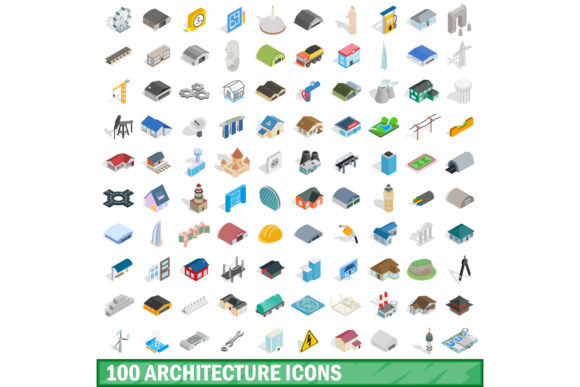
100 Architecture Icons Set, Isometric 3d
In the landscape of digital design, visual clarity often dictates user engagement. Whether you are constructing a dashboard for a real estate platform, illustrating a concept for an urban planning presentation, or simply adding depth to a blog post about sustainable living, the choice of iconography plays a pivotal role. Among the various styles available, isometric 3D has emerged as a preferred method for conveying spatial relationships and structural complexity without overwhelming the viewer with photorealistic detail. The 100 Architecture Icons Set, Isometric 3d addresses this specific need by offering a comprehensive library of vector illustrations designed for versatility, consistency, and high-quality rendering across multiple platforms.
Understanding the Isometric Advantage in Digital Design
To appreciate the utility of this asset pack, it is necessary to first understand why isometric projection remains a staple in modern UI/UX and editorial design. Unlike perspective drawings, which distort objects based on distance, isometric drawings maintain parallel lines and consistent scale throughout the image. This geometric precision allows designers to create scenes that feel three-dimensional while retaining the technical accuracy required for infographics, maps, and interface elements. It strikes a balance between artistic expression and functional clarity.
The 100 Architecture Icons Set, Isometric 3d leverages this principle to provide assets that are not merely decorative but also informative. Each icon represents a distinct architectural element or building type, rendered with enough detail to be recognizable yet simplified enough to integrate seamlessly into larger compositions. This makes them particularly effective for designs where space is at a premium, such as mobile applications or data-rich dashboards, where every pixel must contribute to the overall message.
Key Characteristics and Technical Specifications
A critical factor in the usability of any design asset is its technical format and flexibility. This set stands out due to its multi-format availability, supporting JPG, EPS, AI, PSD, and PNG. This breadth of support ensures that professionals using different software ecosystems can utilize the icons without conversion headaches or loss of quality.
- Vector Scalability (AI, EPS): For users working in Adobe Illustrator or similar vector-based environments, the inclusion of AI and EPS files allows for infinite scaling. You can resize these icons from a tiny favicon to a large billboard print without encountering pixelation or jagged edges. This is essential for responsive design workflows where assets must adapt to various screen sizes.
- Raster Precision (JPG, PNG): The JPG and PNG formats cater to users who prefer ready-to-use raster images. These are ideal for quick mockups, web development, or integration into tools like Figma, Sketch, or Canva. The PNG versions likely include transparency, allowing the icons to sit cleanly over any background color or pattern.
- Layered Editing (PSD): The inclusion of PSD files offers significant value for advanced users. Layered files allow designers to modify colors, adjust shadows, or isolate specific components of an icon. This level of control means the set is not static; it can be customized to match a brand’s specific color palette or stylistic guidelines.
Comprehensive Coverage of Architectural Themes
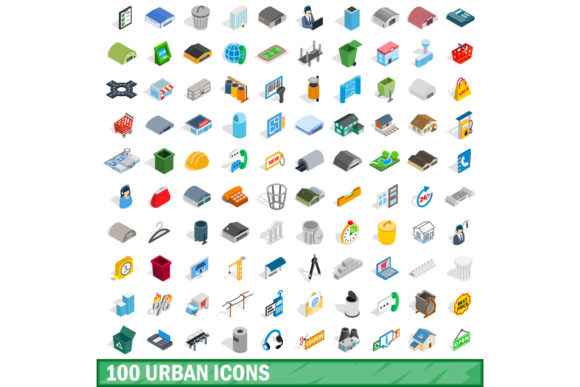
The title "100 Architecture Icons" suggests a broad scope, and the set delivers on this promise by covering a wide spectrum of building types and structural concepts. Rather than limiting itself to generic houses or office blocks, a robust architecture icon set typically includes residential homes, skyscrapers, industrial warehouses, bridges, landmarks, and even interior elements like windows and doors.
This variety is crucial for projects that require narrative depth. For instance, a marketing campaign for a new housing development might need icons representing both single-family homes and community amenities like parks or schools. Similarly, a logistics company might benefit from icons depicting warehouses and distribution centers. The 100 Architecture Icons Set, Isometric 3d provides the visual vocabulary to tell these stories cohesively. By maintaining a consistent style across such diverse subjects, the set ensures that a skyscraper does not look visually disconnected from a suburban cottage when placed side-by-side.
Practical Applications Across Industries
The versatility of this icon set extends far beyond traditional architectural firms. Several professional groups can derive significant value from integrating these assets into their workflows:
- Real Estate Professionals: Agents and property developers can use these icons to create engaging brochures, website listings, and social media graphics. An isometric view of a property layout can help potential buyers visualize the footprint of a home more effectively than a standard floor plan.
- Urban Planners and Architects: While they may have their own specialized CAD tools, these icons serve well in presentations and pitch decks. They offer a quick way to illustrate zoning concepts, neighborhood density, or mixed-use developments without spending hours modeling each element from scratch.
- Marketing and Advertising Agencies: In campaigns related to construction, renovation, or home improvement, these icons add a layer of professionalism and modernity. They help break up text-heavy content and guide the reader’s eye through key points.
- Educators and Content Creators: Teachers and bloggers explaining concepts related to geography, history, or engineering can use these visuals to enhance their materials. A clear, stylized representation of a famous landmark or a basic structural component aids in comprehension and retention.
Evaluating Quality, Consistency, and Long-Term Value
When assessing the long-term value of a design asset, consistency is paramount. A common pitfall in icon sets is the variation in line weight, shading intensity, or perspective angle between different icons. This inconsistency can make a design look disjointed and amateurish. High-quality sets, like the one described here, adhere to strict grid systems and lighting rules. The isometric perspective is maintained uniformly, ensuring that shadows fall in the same direction and highlights reflect light consistently.
Furthermore, the aesthetic appeal of isometric 3D icons lies in their ability to convey volume and texture through color and shape rather than complex textures. This approach not only looks clean but also performs better on digital screens. It reduces cognitive load for the user, allowing them to process information faster. For businesses, this translates to improved user experience and higher engagement rates.
However, it is important to note that while these icons are highly adaptable, they are still pre-designed assets. Users should be mindful of copyright restrictions associated with their license. Most commercial sets allow for use in end products but prohibit reselling the raw icons as a standalone collection. Understanding these terms ensures that your usage remains compliant and ethical.
Limitations and Considerations
No asset is perfect for every scenario. One limitation of isometric icons is their fixed orientation. Because they are rendered from a specific angle, rotating them arbitrarily can break the illusion of depth or cause clipping issues if not handled carefully in design software. Designers must plan their layouts to respect the inherent geometry of the icons.
Additionally, the level of detail in isometric illustrations can sometimes obscure small text labels if used at very small sizes. It is advisable to test these icons at their intended display size before finalizing a design. If fine details become muddy, switching to a flatter, minimalist style might be more appropriate for that specific context.
Conclusion
The 100 Architecture Icons Set, Isometric 3d represents a solid investment for anyone looking to elevate their visual communications with professional-grade architectural imagery. Its strength lies in its combination of technical flexibility, diverse subject matter, and consistent aesthetic quality. By supporting multiple file formats, it accommodates a wide range of workflows, from quick social media posts to detailed vector illustrations. For professionals in real estate, marketing, education, and design, this set offers a reliable toolkit to convey complex spatial ideas with clarity and style. When integrated thoughtfully into a broader design strategy, these icons can significantly enhance the perceived value and readability of your projects.